
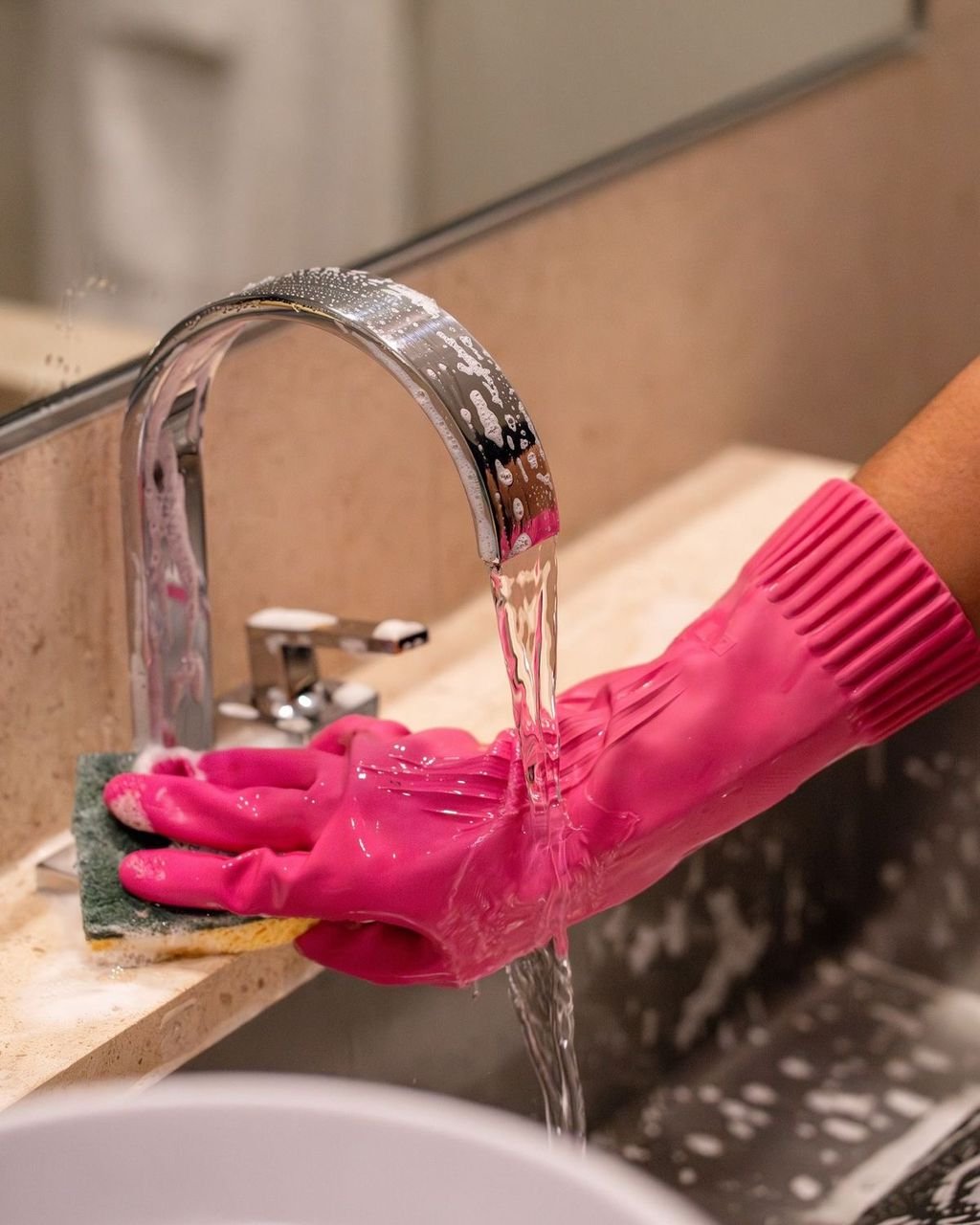
“Cleaning,” “sanitizing,” and “disinfecting” are often used as if they mean the same thing. They do not. Knowing the difference helps you choose a sensible routine, use products safely, and avoid turning ordinary home care into a complicated chemical project.
For most Germantown households, consistent cleaning is the foundation. Extra sanitizing or disinfecting is a separate decision for particular surfaces or circumstances—not an automatic requirement for every room.
The three terms in plain language
- Cleaning removes dirt, residue, and many germs from a surface using water, soap, detergent, and physical action.
- Sanitizing reduces the number of germs on a cleaned surface to a level considered acceptable under a public-health standard.
- Disinfecting uses an appropriate chemical product to kill many of the germs that remain on a surface after it has been cleaned.
The order matters: clean first. Dirt and residue can keep a sanitizer or disinfectant from contacting the surface properly.
When routine cleaning is usually enough
The CDC says regular household cleaning is enough in most situations. A practical routine focuses on visible soil and the places people touch often: counters, faucet handles, doorknobs, light switches, appliance handles, tables, and bathroom fixtures.
Different materials need different care. Use a product intended for the surface, follow the manufacturer’s instructions for electronics and specialty finishes, vacuum soft surfaces as appropriate, and launder washable fabrics according to their care labels.
When disinfecting may be appropriate
Additional disinfecting may make sense when someone in the home is sick, when a household member has a weakened immune system, or when public-health guidance recommends it. Food-contact surfaces and items used by babies may have their own sanitizing instructions, so follow the relevant product and manufacturer guidance rather than applying one method everywhere.
Disinfecting is not a substitute for cleaning, handwashing, ventilation, or appropriate medical advice. No responsible cleaning service should promise a “germ-free” home or claim that surface cleaning prevents illness.
Use cleaning products safely
- Read the entire product label before use.
- Use only the amount and method described by the manufacturer.
- Ventilate the room when the label calls for it.
- Wear the recommended gloves, eye protection, or other equipment.
- Never mix cleaning or disinfecting products.
- For disinfectants, keep the surface wet for the full contact time stated on the label.
- Store products away from children and pets.
If product ingredients are a priority for your household, the EPA’s voluntary Safer Choice label can help identify qualifying routine cleaning products. The label is not a claim that every product is suitable for every surface or situation; the directions still matter.
Where professional cleaning fits
A professional visit can help restore a manageable baseline, tackle routine buildup, and create a repeatable plan for kitchens, bathrooms, bedrooms, living spaces, and floors. Standard Cleaning is designed for maintained spaces that need routine care, while Deep Cleaning is a better starting point when several areas need detailed attention.
If you need sanitizing or disinfecting rather than ordinary cleaning, explain that before booking. The team should confirm the requested scope, compatible surfaces, products, and realistic outcome before the visit.
Frequently asked questions
Should I disinfect every surface every day?
No. The CDC says routine cleaning is enough in most homes. Give regular attention to high-touch and visibly dirty surfaces, and reserve disinfecting for situations where it is actually needed.
Can I mix products to make them work better?
No. Mixing cleaning or disinfecting chemicals can create dangerous reactions. Use one suitable product exactly as its label directs.
Does deep cleaning automatically include disinfecting?
Not necessarily. Deep cleaning describes a more detailed cleaning scope. Ask the provider to confirm any separate sanitizing or disinfecting request before the appointment.
Sources and further reading
Reviewed August 30, 2026. This article provides general household guidance and does not replace product labels, public-health instructions, or medical advice.