
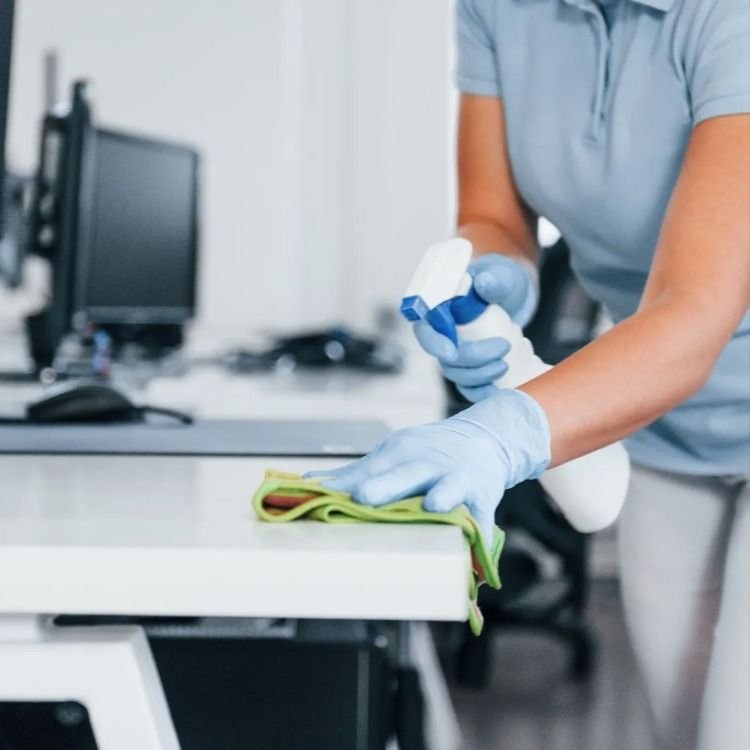
There is no universal rule that every office should be cleaned two, three, or five times a week. A useful schedule starts with how the workplace is actually used: how many people enter, which surfaces they share, how quickly restrooms and break areas become untidy, and what type of flooring handles the traffic.
For a Germantown office, the right frequency should keep the space orderly without paying for tasks that do not need to be repeated at every visit.
Five factors that determine cleaning frequency
- Occupancy: A full office used five days a week needs a different plan from a hybrid space with a few people on site.
- Visitors: Reception areas, conference rooms, showrooms, and client restrooms may need more frequent attention.
- Shared touchpoints: Door handles, switches, break-room appliances, copiers, and shared equipment accumulate use faster than private offices.
- Restrooms and food areas: These spaces often determine the minimum practical frequency for the whole facility.
- Floors and entrances: Weather, parking-lot dust, carpet, hard flooring, and walk-in traffic all affect the plan.
A starting schedule by task
The table below is a planning template, not a CDC or OSHA-mandated schedule. Adjust it for the workplace, season, occupancy, and any industry-specific requirements.
| Frequency to consider | Typical priorities |
|---|---|
| Each occupied day or service visit | Restrooms, break-room food-contact areas, trash, visible spills, entrances, and heavily used touchpoints |
| Several times per week | Vacuuming or mopping traffic lanes, reception areas, shared rooms, dusting, and waste removal where daily service is unnecessary |
| Weekly | Full floor care, work-area dusting, reachable ledges, doors, interior glass touch marks, and less-used rooms |
| Monthly or periodically | Baseboards, vents, high dusting, detailed edges, upholstery or carpet care, and other tasks outside the routine visit |
A small appointment-only office may begin with weekly cleaning plus internal daily tidying. A busy office with shared restrooms and steady client traffic may need several visits each week or daily service. Review the result after the first month instead of treating the initial schedule as permanent.
Prioritize traffic, touch, and visible need
The CDC recommends regular cleaning of high-touch facility surfaces, cleaning other surfaces when visibly dirty, and increasing frequency in high-traffic spaces. Routine cleaning is enough in most community settings. Additional disinfecting is generally reserved for specific circumstances, such as a space where someone has obviously been ill or when public-health guidance calls for it.
That approach keeps the plan practical: focus effort where use and condition justify it, rather than applying the same intensive task to every surface.
Product and worker safety belong in the plan
OSHA requires walking-working surfaces to be kept clean, orderly, sanitary, and as dry as feasible. When a workplace uses hazardous cleaning chemicals, employers may also have responsibilities involving labels, Safety Data Sheets, training, ventilation, and protective equipment.
- Use products suitable for each surface.
- Follow labels, dilution directions, and contact times.
- Never mix chemicals.
- Store supplies securely.
- Address spills and trip hazards promptly.
- Coordinate cleaning around employees, visitors, alarms, and access controls.
EPA Safer Choice-certified products are available for offices and other facilities. Certification can support purchasing decisions, but it does not replace label directions or a workplace hazard assessment.
Questions to answer before requesting service
- How many people use the space on a typical day?
- Which days and hours are occupied?
- How many restrooms, kitchens, or break areas are included?
- Which rooms receive visitors?
- What floor types and approximate square footage are involved?
- Are there secure, sensitive, or restricted areas?
- Who handles consumables, dishes, recycling, and desk items?
- Which periodic tasks should be priced separately?
Bright Path’s Regular Office Cleaning can be scoped around agreed work areas and priorities. Medical, food-service, childcare, industrial, and other regulated environments may require sector-specific procedures beyond a general office-cleaning plan.
Frequently asked questions
Does every office need daily professional cleaning?
No. Frequency depends on occupancy, traffic, restrooms, shared areas, floors, and the standard the business needs to maintain. Some small offices can combine weekly professional service with simple daily staff routines.
Should high-touch surfaces be disinfected every day?
Not automatically. Regular cleaning is enough in most community facilities. Disinfecting should be based on the situation, product instructions, and applicable public-health or industry guidance.
How often should the schedule be reviewed?
Review it after the first few weeks, when occupancy changes, during seasons that affect entrances and floors, or whenever employees consistently report missed priorities.
Sources and further reading
- CDC: When and How to Clean and Disinfect a Facility
- OSHA: General Requirements for Walking-Working Surfaces
- OSHA/NIOSH: Protecting Workers Who Use Cleaning Chemicals
- EPA: Learn About the Safer Choice Label
Reviewed August 30, 2026. This article is a general planning guide, not a mandatory schedule. Regulated workplaces should follow their industry’s requirements.